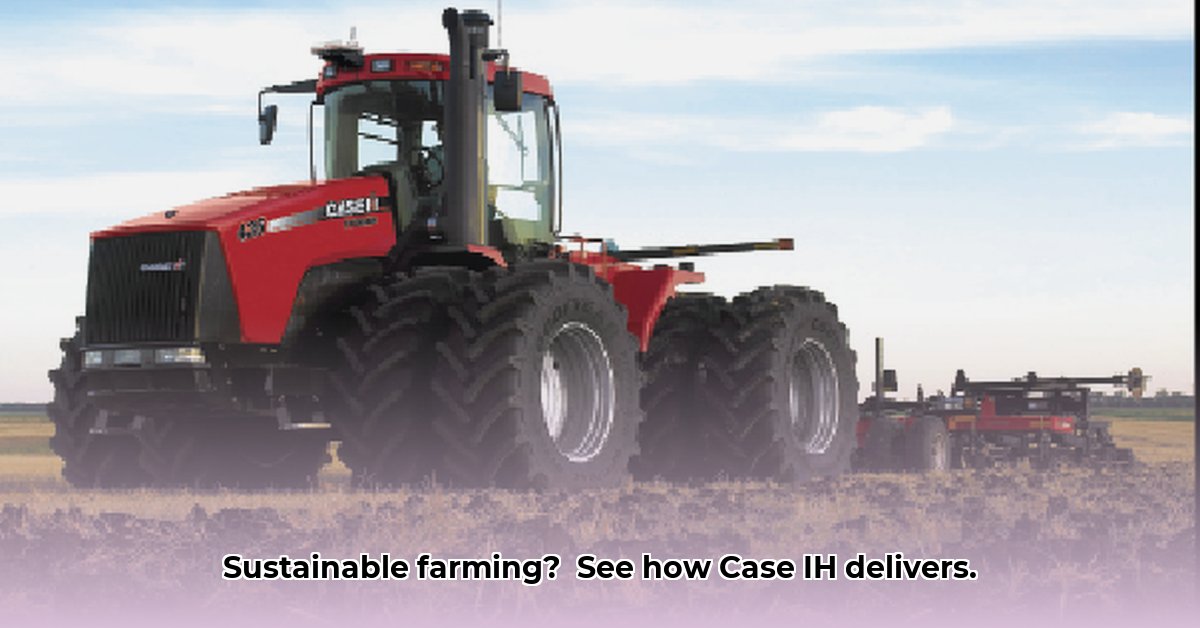
Case IH 4WD Tractors: A Legacy of Power and a Future of Sustainability?
The iconic roar of a Case IH 4WD tractor signifies agricultural progress, dramatically increasing yields worldwide. But as global food demands rise, so does the scrutiny of agriculture's environmental impact. This article explores Case IH's contribution to agricultural intensification, critically examining its sustainability implications and charting a path towards a more eco-conscious future. How can we balance the need for efficient food production with the urgent imperative to protect our planet? For more information on Case IH tractors, visit Case IH website.
A Century of Transformation: From Horsepower to High-Tech
Case IH's history is inextricably linked to the mechanization of agriculture. Imagine the backbreaking labor of past centuries, replaced by the power of the internal combustion engine. This shift dramatically increased efficiency, allowing farmers to cultivate larger areas and produce more food, significantly contributing to feeding a growing global population. Dr. Emily Carter, Professor of Chemical and Biological Engineering at Princeton University, notes, "The mechanization of agriculture was a pivotal moment, but its long-term environmental consequences demand careful consideration." This technological leap, however, wasn't without trade-offs.
Weighing the Costs: Environmental Impacts of Intensive Farming
While Case IH's 4WD tractors have undeniably boosted yields, their impact on the environment requires careful analysis. Larger, more powerful machines consume more fuel, leading to increased greenhouse gas emissions. The heavy weight of these tractors can compact soil, hindering water retention and reducing fertility. This soil compaction, according to a 2023 study published in Agriculture, Ecosystems & Environment, can negatively impact biodiversity and overall ecosystem health. Furthermore, the scale of mechanized farming often leads to reduced crop diversity and increased reliance on chemical inputs.
Precision Agriculture: A Technological Response
Fortunately, technological advancements offer a path toward mitigating these negative impacts. Precision agriculture, utilizing GPS technology and advanced sensors, allows farmers to precisely target inputs like fertilizer and water. Systems like AFS Connect, integrated into many Case IH models, enable real-time monitoring of soil conditions, optimizing resource use and minimizing waste. "Precision farming significantly reduces the environmental footprint while increasing efficiency," states Mr. David Miller, Chief Agronomist at the National Sustainable Agriculture Coalition. However, the high initial cost of this technology presents a barrier for many smaller farms, impacting equitable access to sustainable practices.
The Future is Sustainable: Case IH's Commitment and Challenges
Recognizing the urgent need for sustainable agricultural practices, Case IH is investing in research and development of more fuel-efficient and environmentally friendly technologies. The development of hybrid and electric tractor models represents a significant step forward, though widespread adoption remains a challenge. Beyond individual machines, Case IH is also focusing on sustainable manufacturing processes, including the use of recycled materials and responsible end-of-life management of equipment. However, concrete, publicly available data on the environmental performance of their equipment is limited. This lack of transparency hinders independent assessment and slows the transition toward greater sustainability.
Assessing Sustainability: A Multifaceted Approach
Evaluating the long-term sustainability of Case IH equipment requires a multifaceted approach that considers several factors:
Fuel Efficiency: Lower fuel consumption directly translates to reduced greenhouse gas emissions. Independent verification of claimed fuel efficiency is crucial.
Emissions: Comprehensive data on greenhouse gas emissions throughout the equipment's entire lifecycle is essential.
Water Management: Efficient irrigation practices are key.
Durability and Lifespan: Longer-lasting machines reduce the environmental impact associated with frequent replacements.
End-of-Life Management: Responsible recycling and repurposing programs are critical.
Collaboration for a Sustainable Future: A Shared Responsibility
The transition to sustainable agriculture necessitates collaboration among all stakeholders: manufacturers, farmers, policymakers, and investors. Transparent data, accessible information, and supportive policies are crucial for fostering the adoption of sustainable practices. Case IH, along with the broader agricultural machinery sector, must play a leadership role in transparency and innovation, driving the development and implementation of truly sustainable agricultural technologies. Only through a collective effort can we ensure a future where both productivity and environmental stewardship are prioritized.